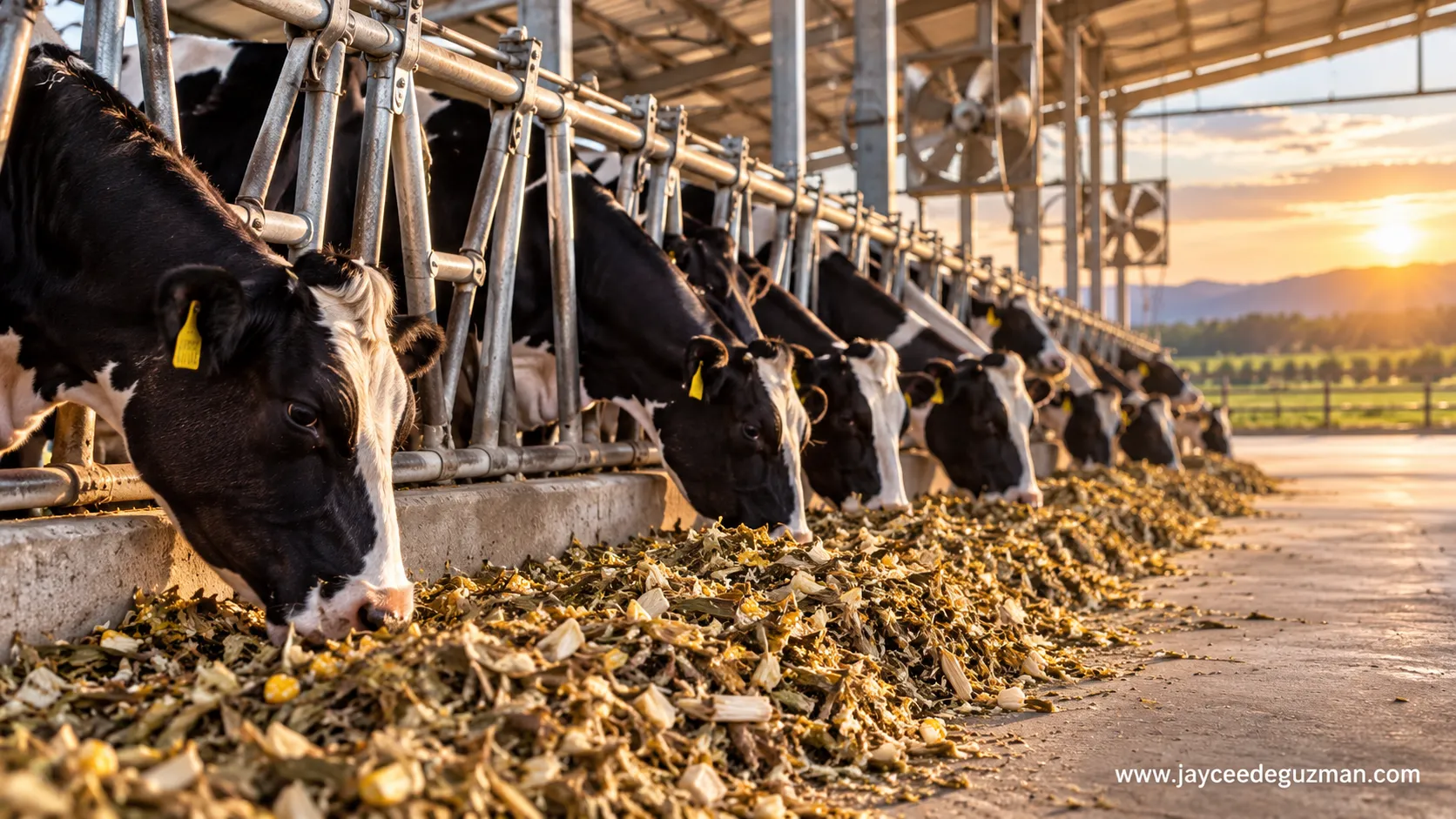

Why Dairy Farms Must Prepare Before Feed Supplies Tighten
Imagine running a dairy farm with enough money to purchase corn silage, only to discover that no supplier can accommodate your order. You are willing to pay, your cattle still need to be fed, and your milk production depends on a consistent supply of quality forage. Yet, the product you need is simply unavailable.
This is a supply problem that money alone cannot solve.
During the COVID-19 pandemic, disruptions to agricultural production, logistics, and supply chains exposed how vulnerable businesses can become when essential supplies are difficult to obtain. I believe dairy farmers should take this lesson seriously as the Philippines faces the risks associated with El Niño. Prolonged dry conditions can affect forage availability, potentially increasing competition for suitable feed.
My concern is straightforward: I do not want dairy farmers to wait until their feed reserves are nearly depleted before looking for corn silage. By then, suppliers may have limited stocks or may no longer be able to accommodate additional orders. Securing a dependable supply before shortages emerge is not merely a purchasing decision; it is an essential part of preparing a dairy farm for uncertainty.
El Niño and Its Implications for Philippine Agriculture
El Niño is the warm phase of the El Niño–Southern Oscillation (ENSO), a climate pattern involving changes in sea surface temperatures and atmospheric circulation across the tropical Pacific. In the Philippines, it generally increases the likelihood of below-normal rainfall, warmer conditions, and prolonged dry spells. These conditions can affect agricultural production, water availability, and forage supplies.
According to the Philippine Atmospheric, Geophysical and Astronomical Services Administration (PAGASA), El Niño advisories provide important information about the evolving climate situation. Dairy farmers should consult the latest updates rather than rely on assumptions about how long dry conditions will last.
I would not assume that every dairy farm will experience the same effects. Rainfall patterns and soil-moisture conditions vary across provinces. Some areas may experience prolonged dry spells, while others may receive rainfall from tropical cyclones or other weather systems.
This is why I encourage dairy farmers to monitor PAGASA’s regional agricultural weather forecasts alongside local farm conditions. A national climate forecast provides an overview of the risk, but it cannot tell every farm exactly when its water supply or forage production will be affected.
For me, the practical question is whether a dairy farm has enough feed to withstand a period of reduced forage availability. Farmers who assess their pasture conditions, water resources, and existing feed inventories early have more time to arrange supplies before shortages become a problem.
How Drought Threatens Forage Availability and Dairy Production
When prolonged dry spells reduce soil moisture, pasture grasses and forage crops struggle to grow. Grass regrowth after cutting or grazing may slow, leaving dairy farmers with less forage to feed their animals. The Department of Science and Technology–Philippine Council for Agriculture, Aquatic and Natural Resources Research and Development (DOST-PCAARRD) identifies prolonged dry periods and erratic weather as challenges to forage yield, nutritional quality, and year-round feed availability in the Philippines. Read the research update.
Corn grown for silage is also vulnerable to water stress. Insufficient moisture can restrict plant growth and reduce the amount of forage harvested. Stress during flowering and pollination can also interfere with kernel development, affecting the crop’s potential grain yield and nutritional composition. PAGASA’s Climate Impact Assessment for Philippine Agriculture specifically identifies rain-fed corn crops at vegetative and reproductive stages as vulnerable to moisture stress.
For dairy farmers, reduced forage availability makes it harder to maintain a consistent feeding program. If cows consume less dry matter—the portion of feed excluding water—they may not receive enough energy and other essential nutrients. This can contribute to declining milk production and loss of body condition. Persistent nutritional deficiencies can also compromise reproductive performance.
Hot weather adds another challenge. Heat-stressed cows often reduce feed intake just when maintaining adequate nutrition is particularly important. They also need sufficient clean drinking water to regulate body temperature and support milk production. When water is scarce, both feed intake and production can suffer further.
These risks are interconnected. In my view, Philippine dairy farmers should assess their forage reserves, water supply, and feeding requirements before prolonged dry conditions make those resources harder to secure.
Corn Silage: The Science of Preserving Forage for Feed Security
Corn silage is forage made by chopping whole corn plants and preserving them through controlled fermentation in the absence of oxygen. Once the chopped material is packed and sealed, naturally occurring lactic acid bacteria ferment plant sugars into organic acids, lowering the pH and helping inhibit spoilage organisms. When properly prepared, corn silage can retain useful nutrients for feeding cattle long after harvest.
Preservation begins in the field. Corn must be harvested at an appropriate stage of maturity and moisture content. The material must then be chopped to a suitable particle size, packed tightly to remove trapped air, and sealed promptly. Poor packing or damaged covers allow oxygen to enter, encouraging yeasts, molds, heating, and nutrient losses.
Nutritionally, corn silage can provide energy from its grain starch and digestible plant material, alongside fiber from the stalks and leaves. However, its actual feeding value depends on factors such as the proportion of grain, harvest maturity, dry matter content, fermentation quality, and fiber digestibility. I would not judge silage quality by appearance alone; laboratory analysis can help determine its suitability for a dairy ration.
Dry matter content matters because it indicates how much feed remains after water is removed. Material that is too wet may experience undesirable fermentation and nutrient losses, while excessively dry material can be difficult to pack adequately. Proper fermentation and careful management during storage and feed-out are equally important to minimize spoilage.
For Philippine dairy farms, stored corn silage can provide a reserve when drought reduces pasture growth or the availability of freshly harvested forage. However, silage does not eliminate the risks of drought, transport disruption, or supply shortages. Farmers must still plan inventory and secure reliable sources.
For example, Alpha Agventure Farms uses a Koster Moisture Tester to assess moisture content before chopping and monitors silage pH as part of its quality-control process. The farm targets a dry matter content of 28% to 32%, providing measurable parameters to guide silage production. However, these measurements should be considered alongside harvest maturity, fermentation quality, and nutrient composition when evaluating the silage’s overall feeding value.
I believe dairy farmers should evaluate silage suppliers on more than price alone. Consistent quality, transparent specifications, available volume, and dependable delivery arrangements all matter, particularly when preparing for possible feed shortages. Comparing these factors helps farm operators make informed procurement decisions based on their actual needs.
Ultimately, corn silage should form part of a balanced ration that accounts for the herd’s nutritional requirements, milk production, and stage of lactation. I encourage dairy farmers to evaluate their available feed sources, compare suppliers based on quality and reliability, and estimate their future forage requirements. Regardless of where they source their corn silage, planning ahead can help them manage supply uncertainties and reduce the risk of feed shortages during prolonged dry conditions.
Feed-Reserve Planning: Calculating How Much Corn Silage a Dairy Farm Needs
I recommend that dairy farmers begin by taking an inventory of their existing feed stocks, including fresh forage, stored silage, hay, and other ration ingredients. They should then determine how much corn silage their herd consumes daily under its current feeding program. The amount varies with herd size, milk production, and ration composition.
The reserve period should reflect local drought exposure, the time needed to arrange another delivery, and the farm’s storage capacity. A farm facing a longer replenishment lead time may need a larger reserve than one with dependable, frequent deliveries.
The basic calculation is:
Required silage reserve = Daily silage consumption × Reserve duration
For example, a dairy farm using 500 kilograms of corn silage daily would need 45,000 kilograms (45 metric tons) to cover 90 days.
However, this is the amount the farm needs to feed its cattle, not necessarily the quantity it should purchase. Handling, storage, and feed-out losses must also be considered.
Illustrative calculation: If the farm expects 10% losses, it would need to procure approximately 50,000 kilograms (50 metric tons) to deliver 45,000 kilograms of usable silage. This assumes the 10% loss applies to the quantity purchased.
Before ordering, farmers should verify that their storage facilities can accommodate the volume and that the purchase fits their cash flow and delivery schedule. Excessive purchasing can tie up working capital and increase spoilage risk, particularly when storage is inadequate. I believe the goal should be to maintain a sufficient, usable reserve – not simply to accumulate as much silage as possible.
The Economics of Securing Corn Silage Before a Shortage
When forage becomes scarce, dairy farmers may have fewer suppliers to choose from, less flexibility in delivery schedules, and greater difficulty maintaining a consistent ration. Even farms with sufficient purchasing power may struggle if available supplies cannot meet demand. I believe this is why feed procurement should be part of routine farm planning rather than an emergency response.
Price comparisons also require more than looking at the cost per kilogram delivered. Corn silage contains water, so I recommend comparing its cost per kilogram of dry matter—the portion remaining after water is removed. For example, a lower-priced silage with higher moisture content may provide less actual feed material per peso than a more expensive product with greater dry matter content.
Nutrient composition matters, too. Differences in energy, starch, fiber digestibility, and spoilage losses affect how much usable nutrition a farm obtains from each purchase. Transport charges, storage requirements, and losses during handling and feed-out further influence the effective cost.
Purchasing in advance can give farmers more time to compare suppliers, schedule deliveries, and build an appropriate reserve. However, buying too early or in excessive quantities can tie up working capital and increase storage losses. Maintaining relationships with more than one qualified supplier may reduce dependence on a single source, although alternative suppliers must still meet the farm’s quality and delivery requirements.
I would base procurement decisions on the herd’s nutritional needs, available budget, storage capacity, and realistic supply outlook. Buying early does not automatically mean buying cheaply. The objective is to secure suitable feed in sufficient quantities at a sustainable cost before shortages restrict the farm’s options.
The Role of Agricultural Support in Building Climate-Resilient Farms
I believe preparing for El Niño should not be the responsibility of individual farmers alone. While dairy farm owners must plan their feed inventories and secure suitable supplies, agricultural resilience also depends on whether farmers can access the support, technology, financing, and market connections they need to keep their operations viable.
This is where the Department of Agrarian Reform, under Secretary Conrado Estrella III, becomes relevant. Through its support services for agrarian reform beneficiaries and their organizations, DAR works to strengthen agricultural enterprises, improve access to markets and financing, and promote climate-resilient farming practices. These efforts are particularly relevant to agrarian reform communities whose livelihoods depend on agricultural productivity.
I see an opportunity to connect these initiatives with a broader concern: how can agricultural communities prepare for climate-related disruptions before they threaten production and income? For dairy farms and forage producers, access to reliable feed supplies is one practical part of that discussion.
Public support and private suppliers have different roles, but both can contribute to agricultural resilience. Government programs can help eligible farming communities strengthen their capacity, while farmers and commercial operators must make practical decisions about feed production, storage, procurement, and herd nutrition.
Evaluating Corn Silage Quality and Supplier Reliability
Before purchasing corn silage, I recommend asking the supplier for its dry matter content and any available laboratory analysis covering crude protein, starch, fiber, and other relevant nutritional parameters. These figures help dairy farmers determine the feed’s suitability for their herd and compare products on a meaningful basis rather than relying on appearance or price alone.
Fermentation quality also deserves attention. Properly preserved silage should not show visible mold or signs of significant spoilage. Excessive heating during storage or feed-out can indicate deterioration and nutrient losses. However, smell and appearance alone cannot establish complete nutritional quality or safety; laboratory testing may be necessary when quality is uncertain.
Farmers should also verify how much silage is actually available, whether quality is reasonably consistent between batches, and whether the supplier can meet the required delivery schedule. Storage requirements must be considered before ordering, especially for farms without facilities suitable for handling large quantities of silage.
For substantial changes to an existing feeding program, I recommend consulting an animal nutritionist who can evaluate the complete ration against the herd’s requirements.
Finally, good silage is of limited practical value if deliveries cannot arrive when needed. I believe dairy farmers should evaluate suppliers on both product quality and their demonstrated ability to meet realistic volume and scheduling commitments. Advance communication and clear purchasing arrangements can help reduce uncertainty when feed availability becomes constrained.
Alpha Agventure Farms: A Practical Option for Dairy Feed Preparedness
With El Niño potentially affecting forage availability in parts of the Philippines, Alpha Agventure Farms offers corn silage as one option for dairy farmers preparing for possible feed shortages.
For transparency, I own Alpha Agventure Farms. I am including the farm in this discussion because securing a suitable forage supply before shortages develop is central to the preparedness issue I have raised throughout this article.
I encourage dairy operators to assess their existing feed reserves and projected requirements while they still have time to plan. Those interested in Alpha Agventure Farms’ corn silage can inquire about current availability, product specifications, pricing, and delivery arrangements.
The goal is to make informed procurement decisions while suitable supplies remain available, rather than wait until feed shortages leave fewer options.
Make Feed Security Part of El Niño Preparedness
El Niño reminds me that dairy farm resilience depends not only on having the money to buy feed, but also on whether suitable supplies remain available when they are needed. Reduced rainfall can affect forage production, while inadequate nutrition and water availability can compromise milk production and herd health.
I encourage dairy farmers to assess their existing feed inventories, evaluate silage quality, calculate their reserve requirements, and arrange purchases before supplies become difficult to secure. Corn silage can help maintain forage availability, but it should form part of a broader plan that includes adequate drinking water, heat-stress management, and balanced nutrition.
If you operate a dairy farm, do not wait until your feed reserves are nearly depleted. Assess your requirements now and contact Alpha Agventure Farms to inquire about corn silage availability and delivery arrangements. Planning ahead gives you more time to make informed decisions before supply constraints narrow your options.