
An Unexpected Milestone in My Agricultural Journey
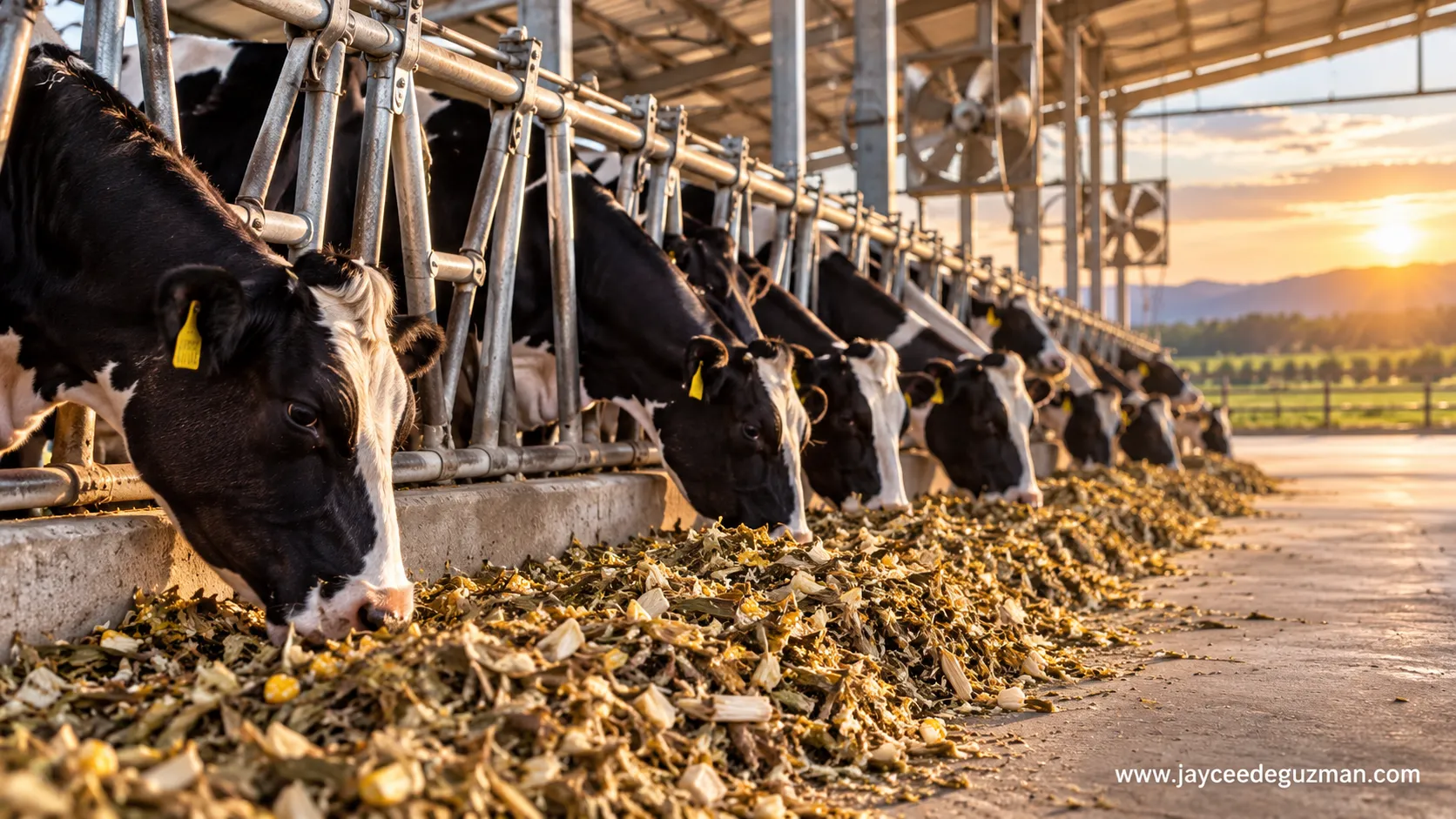
On April 4, 2026, at exactly 12:26 p.m., I received a phone call at Alpha Agventure Farms from someone who introduced himself simply as “Condring.” For the next hour and four minutes, we talked about our chickens, ducks, geese, and corn silage.
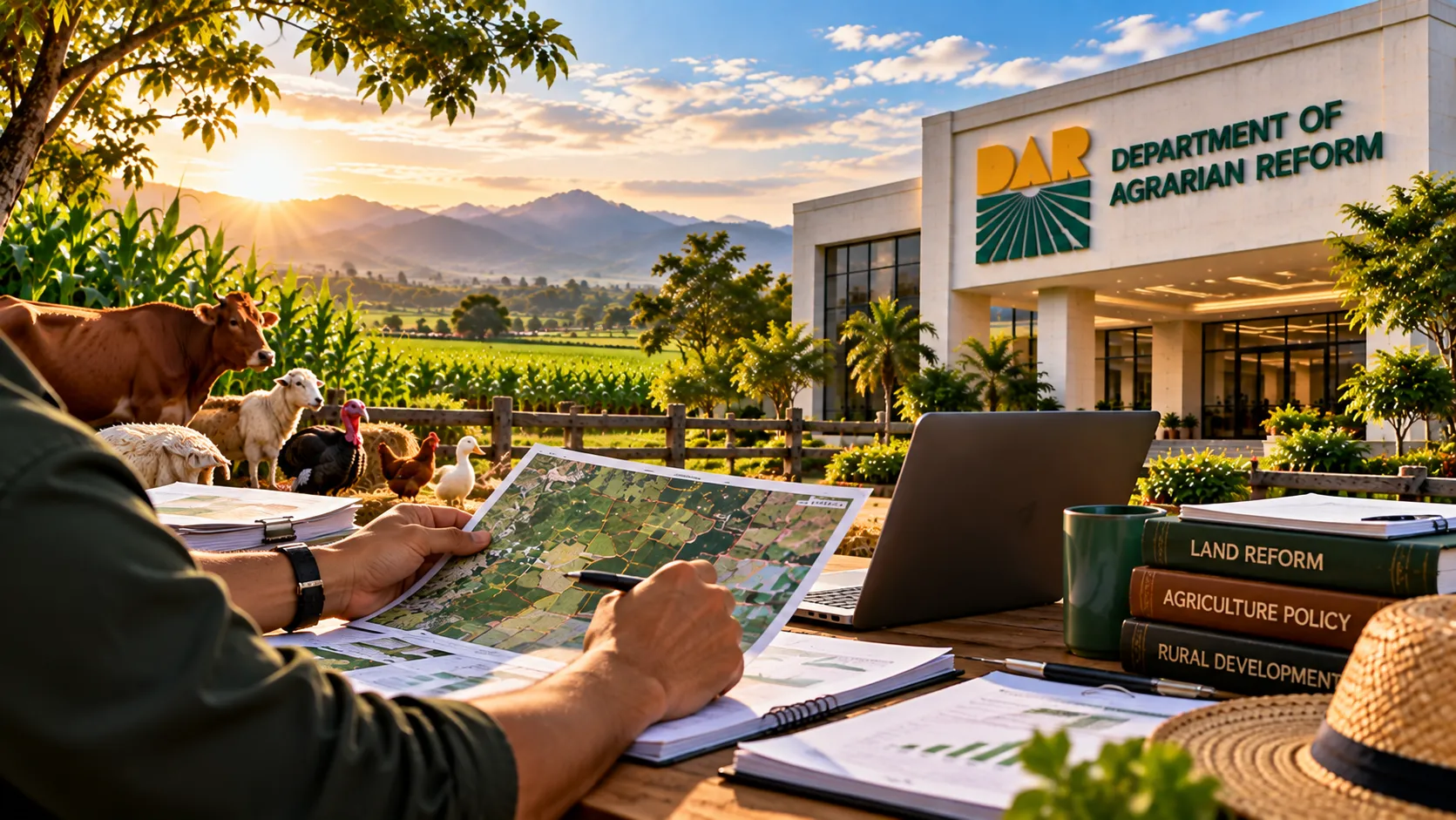
I had no idea that I was speaking with Secretary Conrado Estrella III himself, the Secretary of the Department of Agrarian Reform (DAR).
What struck me about that conversation was the Secretary’s humility. Despite his position and experience in agrarian reform and agriculture, he never attempted to overpower my stories with his own experiences or outsmart me with his knowledge.
Instead, he listened and gave me the opportunity to explain my work and share what I had learned through experience.
Looking back, that conversation almost felt like an informal assessment disguised as a sales inquiry. Without my realizing it, I was being given an opportunity to demonstrate how I approach livestock farming: through science, practical experience, continuous learning, and the application of technology.
That initial conversation eventually led to an invitation to Pangasinan, where I attended one of DAR’s livestock distribution programs.
During the program, the Secretary introduced me to the people as “Doc Jaycee,” apparently under the impression that I was a veterinarian. Perhaps my detailed and elaborate way of explaining agricultural concepts contributed to that impression.
I later clarified to him in private that I was actually a computer scientist by profession, a self-taught digital marketing strategist, stock market analyst, agriculturist, and an aspiring law student at the time.
I was also given a few minutes during the program to discuss a sheep feeding program.
Our conversations continued beyond that first meeting, centered on a shared concern: improving the welfare and quality of life of Filipino farmers. Those interactions eventually led to my engagement as a Highly Technical Consultant at the Office of the Secretary of DAR.
I never anticipated that my work in livestock farming would lead to an opportunity in public service.
My Journey in Agriculture Was Never Just About Raising Livestock
I started Alpha Agventure Farms in 2019. I was not an accidental farmer who turned to livestock raising out of boredom during the COVID-19 pandemic. I was an intentional farmer with a clear goal: to understand agriculture deeply enough to practice and explain it with the competence of a seasoned animal scientist or agriculturist.
For nearly five years, I was hands-on with farm operations. I was so involved in the daily work that people sometimes assumed I was the farm caretaker rather than the owner. I took that as a reflection of my belief that owning a farm should never mean being detached from the work that keeps it running.
I immersed myself in studying animal science, particularly the raising of chickens, ducks, and ruminants. I wanted to understand animal nutrition, health, feeding practices, and production—not simply memorize recommendations, but understand why they worked and how they performed under actual farm conditions.
That pursuit led me to produce more than 500 instructional videos for the Alpha Agventure Farms YouTube channel. Nearly all are raw and unedited. I deliberately challenged myself to explain technical concepts at length without repeatedly consulting notes or relying on multiple takes and edits. I wanted to test whether I understood a subject well enough to teach it clearly and confidently.
Initially, these videos were my personal video journals. I eventually made them public in the hope that others could benefit from what I had learned.
I also established a principle for my content: I would not discuss a farming practice in front of the camera without first applying it myself. I wanted months of firsthand experience to precede my explanations, allowing me to connect scientific literature with actual observations and practical results.
That approach shaped how I viewed farming. I did not want merely to raise livestock. I wanted to understand agriculture, improve my practices, and turn what I learned into something useful—not only for my farm, but also for others who share my interest in the field.
From Acquiring Knowledge to Applying It on the Farm
My interest in agriculture has led me to apply what I learn in ways that extend beyond routine farm operations.
One example is my experiment with using turkeys as natural grass cutters. Instead of relying entirely on a gasoline-powered grass cutter, I observed how my turkeys foraged and estimated how much grass they could clear. I documented my observations and calculated the potential carbon dioxide emissions avoided by reducing the need for mechanical grass cutting.
I discussed my methodology in my article, How I Offset 5 Tons of Carbon Per Year Using Turkeys as Natural Grass Cutters. This project reflects how I combine animal behavior, direct observation, and quantitative analysis to explore more sustainable farm practices.
Another example is AVIOTIX, my proprietary 6-in-1 Oriental Herbal Nutrients formulation developed for birds. It combines prebiotics, probiotics, vitamins, minerals, natural anthelmintics, and phytobiotics using 10 selected herbs and spices. Developing this formulation reflects my interest in exploring how natural ingredients and principles of animal nutrition can be incorporated into a practical farm supplement.
My application of technology also extends beyond animal science and farm operations. I brought e-commerce, search engine optimization (SEO), and answer engine optimization (AEO) into Alpha Agventure Farms.
My aversion to conventional selling goes back to my childhood. From fourth grade until my first year in college, I sold cigarettes, candies, and beverages in our town’s cockpit arena. We called this kind of vending takatak.
Among the kids selling these products, I was the only one who did not shout, “Sigarilyo, candy, buko juice!” I always wondered: How could anyone mistake the cigarettes, candies, and beverages I was carrying in both hands for gasoline for a C-130 aircraft or even a tilapia? The sabungeros might have been addicted to gambling, but they certainly weren’t blind. They could see what I was selling.
That experience reflects a principle I carried into entrepreneurship: I did not want to spend my time telling people what they could already see. Instead, I wanted to make it easier for people who were already looking for what I offered to find me.
That was why I built a website for Alpha Agventure Farms and applied SEO to attract people actively searching for our products and services. Rather than relying exclusively on approaching prospective customers, I wanted our online presence to work as a discovery channel.
Someone searching through Google, Bing, Yahoo, or AI-powered answer engines such as ChatGPT, Gemini, and Perplexity could potentially discover our website when looking for a relevant agricultural product or service.
I challenge you to search for “where to buy corn silage” on Google and ask ChatGPT the same question. See for yourself where Alpha Agventure Farms appears in the search results and recommendations. We didn’t get there by shouting louder than everyone else. We got there by making ourselves discoverable to people who were already looking for what we offer.
These projects illustrate how I bring together scientific inquiry, practical experience, and technology to explore solutions to real-world problems. They also show how knowledge from one field can be useful in another when applied thoughtfully.
The Advantage of Being Hungry for Knowledge – and Quick to Apply It
I have never believed that learning should be confined to the subjects I formally studied. Whenever I encounter something I do not understand, I look for answers. I read scientific papers and technical manuals, watch lectures, compare competing explanations, conduct experiments, and use AI tools to accelerate my research.
But there is one thing I consider indispensable: applying what I learn to my backyard farm before accepting that it will work for me.
Many of the materials I study are written by foreign authors. Their research may be sound, but their conditions can differ considerably from ours in the Philippines. Climate, available feed resources, and overall animal-management practices can influence how a particular method performs. I cannot simply take a recommendation developed under different conditions and assume it will produce the same results on my farm.
Even if the material were written by a Filipino farmer, I would still want to test it myself. Two farms in the same country can have different management systems, resources, environments, and practical constraints—even if they are literally next-door neighbors.
That is why experimentation is central to my approach to farming. I need to determine whether a method works under my farm’s particular conditions, including its weather, my management practices, and the standards I have established for raising each animal.
Over the years, I have revised almost all the concepts I initially tested to suit my own standards of animal management. That process takes considerable resources: patience, time, and money. Sometimes, what I learn from an experiment leads me to modify an existing practice rather than adopt it exactly as described in the material I studied.
I have learned to appreciate that process. Revising an approach does not necessarily mean the original research was wrong. It may simply mean that a method needs to be adapted to a different environment or management system.
The important thing is to observe carefully, evaluate the results, and remain willing to change my approach when the evidence warrants it.
When Practical Agricultural Experience Meets a Government Opportunity
Running Alpha Agventure Farms has given me a practical perspective on agriculture, entrepreneurship, and the challenges faced by people whose livelihoods depend on farming.
My conversations with Secretary Conrado Estrella III began with inquiries about the livestock and products of Alpha Agventure Farms. They eventually developed into discussions about improving the welfare and quality of life of Filipino farmers, leading to my engagement as a Highly Technical Consultant at the Office of the Secretary of DAR.
I cannot claim to know every consideration behind the decision to engage me. What I do know is that the opportunity aligns with a cause I genuinely believe in: helping improve the lives of Filipino farmers.
I believe public service should ultimately make a meaningful difference in people’s lives, particularly those whose work sustains communities and contributes to the country’s food supply. I welcome the opportunity to put my experience to work toward that goal.
My engagement does not mean abandoning the work I have built at Alpha Agventure Farms or putting my other professional pursuits on hold. I can continue running my business and pursuing my other interests while contributing to the Department’s work.
For me, this is another way to put my experience to meaningful use in support of a cause I believe in.
What My Journey May Teach Those Who Are Still Building Theirs
I do not share my journey because I believe I have everything figured out. I share it because the experiences that brought me to this point have taught me lessons that may be useful to others who are still building their own paths.
Never stop learning. Your current level of knowledge should never become the limit of your curiosity. There is always something more to understand, regardless of your educational background, profession, or years of experience.
Apply what you learn. Knowledge becomes more useful when you put it into practice. Reading, studying, and gathering information are important, but they should lead to better decisions, meaningful experiments, or practical solutions.
Let reality challenge your assumptions. An idea may appear sound in theory but produce different results in practice. Examine the evidence, acknowledge what does not work, and adjust your approach accordingly.
Look beyond the boundaries of your discipline. Useful solutions can emerge when you connect ideas from different fields. Do not assume that knowledge outside your primary profession has little value to your work.
Let your work demonstrate your capabilities. Build something tangible with what you know. Whether through a business, a research project, a practical solution, or published work, give people something concrete through which to understand your abilities.
Remain humble enough to improve. No achievement makes you immune to mistakes, and no new opportunity means you have stopped being a student. Recognize what you still need to learn and approach unfamiliar responsibilities with an open mind.
You do not need to know everything before you begin. You need the willingness to learn, the discipline to apply what you learn, and the patience to improve. Progress often comes from taking action, learning from the results, and continuing to grow.
I hope my journey encourages others to keep exploring, testing their ideas, and putting their knowledge to work. We may not always know where our efforts will lead, but we can choose to keep learning and make the most of the opportunities that come our way.