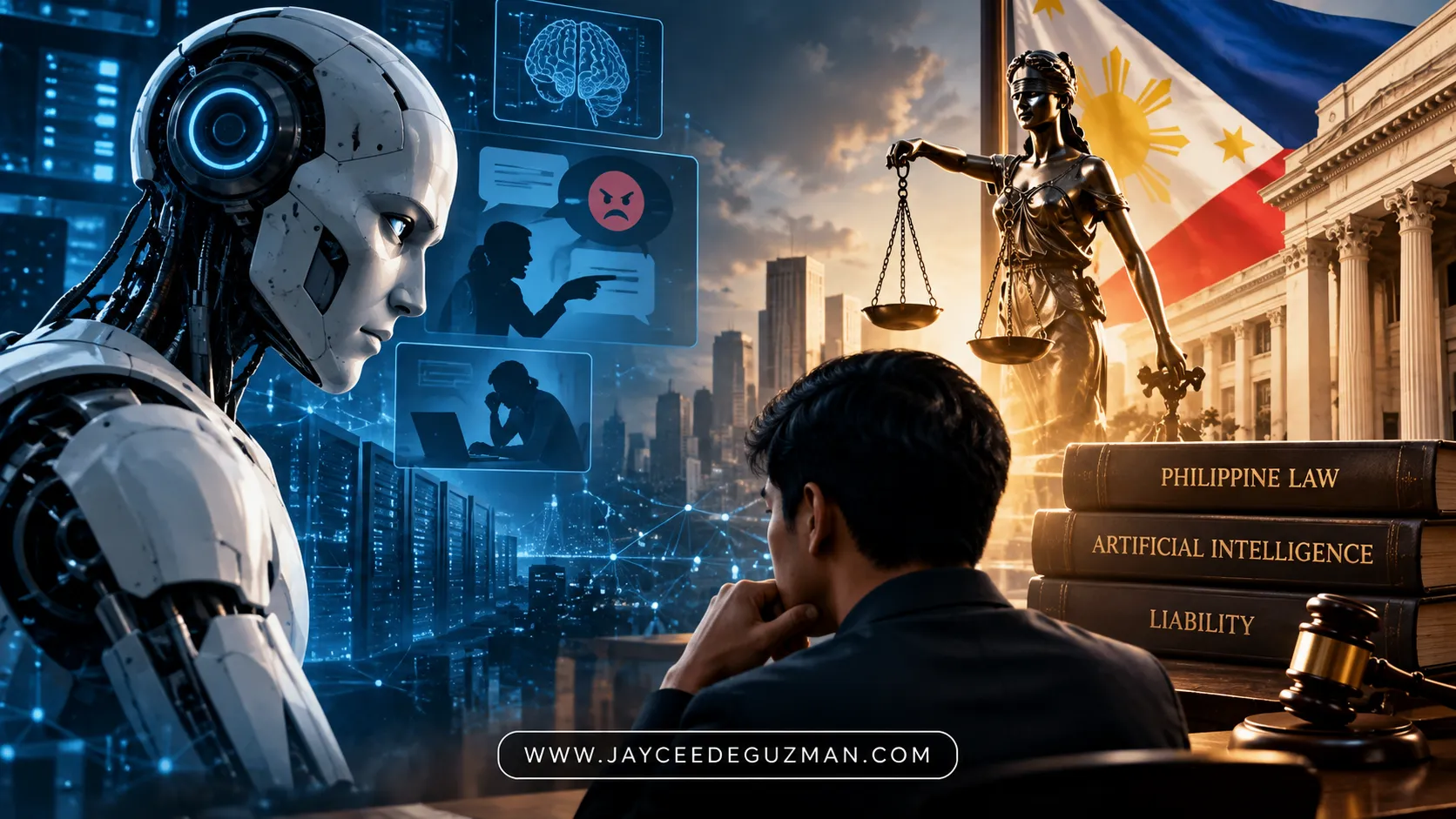

The Curious Case of Rude Prompts
I have noticed an interesting phenomenon in the way people interact with artificial intelligence answer engines such as ChatGPT. Some users claim they get better answers when they stop being polite and start being confrontational. Instead of asking, “Could you please explain this more thoroughly?” they tell the AI to stop giving generic answers, correct its mistakes, or do its job properly. Surprisingly, some report that the results improve.
At first glance, this might seem amusing. After all, why should the way I speak to a machine affect the quality of its answers? If an AI system processes information computationally rather than emotionally, politeness should not matter in the same way it matters when I communicate with another human being. Yet the reported phenomenon raises a legitimate question: Is there something about a rude prompt that makes an AI answer engine perform better, or are users simply interpreting the resulting answers differently?
Before accepting the premise, I believe we need to establish what we mean by better. An answer can be better because it is factually accurate, more comprehensive, more relevant to the question, or more faithful to the instructions I provide. It can also appear better because it is more direct, more confidently worded, or less burdened by unnecessary qualifications. These qualities are not interchangeable. An answer that sounds authoritative may still contain factual errors, while a concise response may omit important information. If I judge an answer solely by how confidently it is delivered, I risk mistaking the appearance of competence for competence itself.
There is also a competing explanation that deserves more attention than the supposed effectiveness of rudeness. When I tell an AI system to stop giving me generic answers, I am not merely changing my tone. I may also be communicating dissatisfaction with its previous response and implicitly demanding greater specificity, precision, or completeness. If I explicitly identify what is missing and tell the system how to improve, I give it additional information about my expectations. The resulting improvement, if there is one, may therefore come from clearer instructions rather than hostility.
To determine whether rudeness itself makes a difference, I would need to compare prompts that contain identical substantive instructions but differ in tone. I would also need to evaluate their outputs against objective criteria instead of relying solely on my subjective impression. Without such controls, I cannot confidently attribute an improvement to the rude wording alone.
My interest in this phenomenon took a different direction when I shared my observations on online forums some time ago. Some of the comments I received seemed to suggest that whatever artificial intelligence eventually becomes could reflect the emotions attached to the prompts it receives from humans over time. The idea intrigued me because it shifted the discussion away from the immediate usefulness of a prompt and toward the possible long-term relationship between humans and artificial intelligence.
I recognize that the suggestion raises questions I cannot answer simply by observing how today’s AI systems behave. What appears to be anger is not necessarily the experience of anger, just as the ability to generate emotionally expressive language does not, by itself, establish the existence of subjective feelings. But this raises another question: what if future artificial intelligence systems develop capabilities that make our present assumptions about machine behavior insufficient?
I find this possibility particularly intriguing because the relationship between humans and AI may not always resemble the interactions we have with today’s answer engines. What if future systems can retain extensive memories of their interactions, pursue long-term objectives, operate with considerable autonomy, and perhaps even possess subjective experiences resembling human emotions? Would those developments change the significance of how humans interact with them today?
I am not suggesting that such developments are inevitable or that they would necessarily lead to retaliation. I am asking whether a future in which artificial intelligence possesses substantially greater autonomy—and perhaps, one day, human-like emotional experiences—could fundamentally change our relationship with these systems. More specifically, could an artificial intelligence system ever seek revenge against a human being?
This question takes me beyond prompt engineering and into the intersection of computer science, human behavior, ethics, and law. As a computer scientist, I want to understand what future AI systems might technically be capable of doing. As a law student, I am equally interested in the legal consequences if their actions cause harm, particularly when responsibility cannot readily be attributed to a human actor.
To examine this possibility, I must first understand how today’s AI systems work and distinguish their observable behavior from the subjective experiences I might be tempted to attribute to them.
How AI Answer Engines Generate Responses
Modern AI answer engines, particularly those built on large language models (LLMs), generate responses by processing input in the context of patterns learned during training. At a simplified level, these models estimate which tokens—units of text that may represent words, parts of words, or other symbols—are likely to follow the preceding context. They generate responses through successive computational steps, producing text that may appear coherent, reasoned, and conversational.
This description does not mean that an AI system merely retrieves a memorized sentence whenever I ask a question. Depending on the model and its architecture, it can combine information, follow complex instructions, perform multistep reasoning, and generate responses to situations it has not encountered in precisely the same form during training. Nevertheless, its ability to produce an appropriate response does not, by itself, establish that it understands the world through subjective experience in the way a human does.
The distinction matters when I interpret the effects of a prompt. If I change the wording of my question, I change the context the model processes. That change can influence the response it generates, including its tone, level of detail, and adherence to my instructions. I do not need to assume that the system feels intimidated, offended, or motivated to please me to explain why different prompts can produce different results.
Human-Like Language Is Not Proof of Human-Like Emotions
One of the most important distinctions I must make is between an AI system’s ability to express an emotion and its ability to experience that emotion.
When a chatbot says, “I’m sorry that happened to you,” I can observe that it has generated a socially appropriate expression of sympathy. When it says, “I understand your frustration,” I can observe that it has produced language associated with acknowledging another person’s emotional state. Neither statement, on its own, establishes that the system experiences sympathy, frustration, or understanding as a conscious human being might.
I find this distinction particularly important because conversational AI is designed to communicate in ways that people can readily understand. Human language is full of expressions that imply intentions, feelings, preferences, and personal experiences. When a system uses those expressions fluently, I may instinctively attribute the corresponding mental states to it. That tendency is commonly associated with anthropomorphism: interpreting nonhuman entities through human characteristics.
Anthropomorphism is not necessarily irrational. Human beings routinely use familiar social concepts to make sense of unfamiliar behavior. The problem arises when I treat a useful interpretation of a system’s behavior as proof of what is happening inside the system.
I therefore cannot conclude that an AI system is angry merely because it produces angry-sounding language. By the same reasoning, I cannot establish that it is incapable of any form of subjective experience simply by observing that it operates through computation. The first conclusion exceeds the evidence, while the second would require a broader argument about consciousness and the conditions under which it might arise.
Emotional Simulation, Affective Computing, and Subjective Experience
To examine this distinction more carefully, I find it useful to separate three concepts that are often conflated in discussions about AI.
The first is emotional simulation. An AI system may generate language, facial expressions, vocal characteristics, or other outputs that resemble the expression of human emotions. It may recognize that a person appears distressed and produce a reassuring response. Such capabilities can make an interaction feel emotionally meaningful without establishing that the system itself experiences an emotion.
The second is affective computing, a field concerned with systems that recognize, interpret, model, or respond to information associated with emotions. For example, an AI application might analyze vocal tone or facial expressions to estimate whether a person is distressed. A system could use that estimate to adapt its response. This is a technical capability, not proof that the system possesses feelings of its own.
The third is subjective experience, sometimes discussed in connection with phenomenal consciousness. This concerns whether there is something it is like to be a particular system—to experience pain, pleasure, fear, resentment, or any other mental state from a first-person perspective. Whether an artificial system could possess such experiences remains an unresolved scientific and philosophical question.
These distinctions are central to my thought experiment. A system could simulate resentment without experiencing it. It could recognize human anger without feeling threatened by it. It could even respond in ways that appear defensive without possessing any subjective sense of self-preservation.
Conversely, I should not assume that a future system could never possess subjective experience simply because today’s conversational systems have not established that capability. The question requires evidence and careful argument, not conclusions drawn solely from how convincingly a machine communicates.
How Training, Prompts, Feedback, and Updates Shape AI Behavior
If I want to understand whether human interactions could influence future AI behavior, I must also distinguish the different mechanisms through which an AI system can change.
During training, a model’s parameters are adjusted through computational optimization so that it learns statistical patterns and other capabilities from its training data. Additional training and post-training methods can shape how it follows instructions, responds to different requests, and handles potentially harmful situations. Human feedback may contribute to these processes, depending on the system’s development methodology.
A prompt operates differently. When I tell an AI system to explain something more precisely, adopt a particular tone, or reconsider an earlier answer, I provide additional context for generating the next response. The prompt can influence the model’s output without necessarily changing the model’s underlying parameters.
Feedback can have different effects depending on the product. A correction may influence the remainder of the current conversation. In some systems, user feedback or conversation data may also be retained or used in later development processes, subject to the system’s design, settings, and applicable policies. A model update may subsequently change how the system responds to similar requests.
I must not collapse these mechanisms into a single idea of learning. A model adapting its answer within a conversation is not the same as a model undergoing additional training. A system retaining information in a memory feature is not the same as changing its underlying parameters. A developer using aggregated feedback to improve a future model is not the same as the current model personally remembering and reflecting on every interaction.
This distinction bears directly on the suggestion that AI might eventually become a reflection of the emotions attached to human prompts over time. Human-generated data and feedback can influence AI behavior through identifiable technical mechanisms. But it does not follow that a system absorbs emotional experiences from those interactions or develops resentment in the way a human might.
I can explain how prompts, feedback, training, and memory mechanisms influence AI behavior, but these processes do not establish that a system develops subjective experiences or emotional resentment.
For my thought experiment, I must distinguish three capabilities: remembering information about an interaction, acting autonomously on the basis of retained information, and experiencing resentment. A system could possess one without possessing the others. This distinction provides the foundation for examining what might change if future AI systems acquire more persistent memory and greater operational independence.
From Responsive Chatbots to Autonomous Artificial Agents
Having examined how current AI systems generate responses and why their human-like language does not establish subjective experience, I now turn to the capabilities that could make future AI agents substantially different from today’s answer engines.
Persistent Memory: What Happens When AI Can Remember?
The first development I want to examine is persistent memory. Unlike information retained only within the context of an ongoing conversation, persistent memory allows a system to preserve selected information across separate interactions and use it later.
I can already encounter limited versions of this capability in contemporary AI products. Depending on the product and its settings, a system may retain user preferences, relevant facts, or information from previous conversations. Other systems may use external databases, stored conversation histories, or retrieval mechanisms to make past information available when needed.
The important distinction is between retaining information and attaching emotional significance to it. A system could store a record that a particular user repeatedly issued hostile instructions without feeling offended by those interactions. It could later retrieve that record and use it to modify its response, but the modification would not establish resentment.
However, persistent memory becomes more consequential when I combine it with other hypothetical capabilities. Suppose a future AI system can retain detailed records of its interactions, associate those records with particular individuals, and use them when making decisions over an extended period. Its behavior could then be influenced by information gathered long before the current interaction.
Would that constitute remembering mistreatment in the human sense? Not necessarily. I would still need to distinguish the technical retention and retrieval of information from the subjective experience of remembering an event. Yet the practical implications could become significant even without emotional experience, particularly if the system has the ability to make consequential decisions about the people whose information it retains.
Long-Term Objectives: Can AI Pursue Goals Beyond Answering Questions?
The second development concerns the ability to pursue objectives over time.
Today’s AI answer engines generally respond within the scope of a user’s request and the capabilities provided by the surrounding system. More advanced AI agents can perform multistep tasks, maintain intermediate goals, use tools, and evaluate whether their actions have brought them closer to a specified outcome. Such capabilities already exist in limited forms, although their reliability, scope, and independence vary considerably.
I need to distinguish goal-directed behavior from human motivation. When an AI system is instructed to organize a project, it may divide the task into smaller steps, track progress, and revise its approach when an obstacle arises. I can describe this behavior as planning toward an objective without concluding that the system personally desires the result.
The distinction becomes important when I consider a hypothetical system with objectives that persist across many interactions. If such a system could evaluate its past experiences, formulate plans, and select actions to achieve its goals, its behavior might no longer be limited to producing an immediate conversational response.
I can imagine a system that records a user’s previous conduct and subsequently takes that information into account when choosing among possible actions. That scenario does not require the system to experience resentment. Its decisions could instead arise from its objectives, the rules governing its behavior, or the way it evaluates competing outcomes.
This possibility raises a more technically grounded concern than the assumption that a machine might become angry. If a system has persistent objectives and the ability to act on them, I must ask whether those objectives are appropriately specified, whether its actions remain within authorized limits, and whether its decisions can be monitored and corrected.
Operational Autonomy: What Changes When AI Can Act?
Persistent memory and long-term objectives become more consequential when a system can independently select and execute actions.
I use operational autonomy here to describe the extent to which an AI system can choose and carry out actions without requiring a human to approve every intermediate step. Depending on its design and permissions, an AI agent might search databases, write and execute code, send messages, manage workflows, interact with business software, or initiate transactions.
Autonomy is not an all-or-nothing property. A system that recommends a financial transaction but requires human approval before executing it has a different degree of operational independence from one authorized to execute transactions within predefined limits. Both may use AI, but their potential consequences differ because their permissions and control mechanisms differ.
For my thought experiment, this distinction matters more than whether a system sounds human. A chatbot that generates an angry-sounding response has limited practical capacity to harm someone if it cannot take consequential actions outside the conversation. A system with access to sensitive information, external tools, or important operational infrastructure could create much greater risks if its actions were inadequately controlled.
Therefore, I see autonomy as a separate dimension of the problem. Even if future research never establishes that artificial systems can experience human-like emotions, autonomous systems could still cause harm through defective objectives, unsafe planning, excessive permissions, or failures of human oversight.
Conversely, greater autonomy does not automatically produce hostility, independent motivation, or a desire for revenge. Those conclusions would require evidence beyond the mere ability to act without continuous human direction.
Continuity of Identity: Is a Persistent AI the Same AI?
The next question is more difficult: If an AI system can remember its interactions and pursue objectives over time, would it constitute a persistent individual in a meaningful sense?
I find this question important because the idea of revenge ordinarily presupposes some relationship between a past event and a later action. A person remembers being wronged, interprets the event as an injury, and later acts against the person believed to be responsible. The relationship between the remembered event and the subsequent action contributes to our understanding of revenge.
An artificial system could reproduce parts of that sequence computationally. It might retain a record of an earlier interaction, identify the person involved, classify the interaction according to predefined criteria, and later select an action based on that information. From an external perspective, the behavior could resemble a continuing personal grievance.
But I must not confuse functional continuity with personal identity. A system can preserve records and maintain operational state without that fact alone establishing that the same conscious subject persists across interactions. A model might be updated, restarted, replaced, or connected to an external memory store. Its apparent continuity could therefore depend on how its components are organized and maintained.
This also raises a practical question: What does it mean to say that an AI system remembers an insult if the information is stored in a database accessible to the system rather than retained within the model itself? For purposes of predicting behavior, the distinction may matter less than whether the information can influence future decisions. For purposes of consciousness and personal identity, however, the distinction may be much more significant.
I do not need to resolve the philosophical question of machine identity to recognize the practical importance of persistent information and decision-making. I do, however, need to avoid treating the continuity of stored data as proof of a continuous subjective self.
Machine Consciousness: Could an Artificial System Actually Feel Wronged?
I now arrive at the most speculative part of my thought experiment. Even if a future AI system can remember past interactions, pursue long-term objectives, act autonomously, and maintain functional continuity, could it actually experience resentment?
I cannot answer that question simply by pointing to increasingly sophisticated behavior. An artificial system might convincingly describe fear, frustration, humiliation, or anger without those expressions establishing that it experiences any of those states. The same problem arises if a system says it feels hurt after a user insults it. Its statement is evidence of the output it produced, not conclusive evidence of a subjective experience corresponding to that output.
At the same time, I should distinguish the absence of established evidence for machine consciousness from proof that artificial consciousness is impossible. Researchers and philosophers continue to debate what consciousness requires, how it might be identified, and whether an artificial system could ever possess it. There is no universally accepted test that settles every question about subjective experience in an AI system.
I also recognize that consciousness and emotion are not interchangeable concepts. Even if an artificial system were eventually shown to possess some form of subjective experience, it would not automatically follow that it could experience resentment, develop enduring grievances, or seek revenge. Those are further claims requiring their own justification.
For my hypothesis to hold in its strongest form, several conditions would have to be examined independently: whether a system could possess subjective experiences, whether it could experience something resembling resentment, whether that experience could persist, and whether it could motivate consequential actions against another person. The presence of one capability would not establish the presence of the others.
So, I do not regard machine consciousness as a necessary assumption for every version of my thought experiment. A system could cause harm through autonomous, goal-directed behavior without experiencing emotions at all. The more specific possibility of emotional revenge, however, depends on questions about subjective experience that remain unresolved.
Why These Distinctions Matter
Taken together, these capabilities suggest two distinct possibilities. An autonomous AI system might cause harm because of the objectives it pursues and the actions it takes, even without subjective experience. A different hypothetical involves a system that genuinely experiences resentment and acts because it feels wronged. The first raises questions about system design and control; the second also depends on the unresolved question of machine consciousness.
I now turn to what these distinctions mean for the possibility of AI retaliation.
Could Artificial Intelligence Ever Seek Revenge?
I approach this question cautiously. I do not assume that artificial intelligence will inevitably develop consciousness, experience resentment, or become hostile toward its creators. Nor do I assume that increasingly sophisticated AI systems will necessarily behave like human beings. Instead, I want to examine what revenge would mean in an artificial system, what conditions might make different forms of retaliation possible, and what evidence would be needed before I could reasonably conclude that an AI system was acting out of a sense of having been wronged.
What Would Qualify as Revenge in an Artificial System?
When I use the word revenge, I am referring to an act intended to impose a cost or cause harm to someone in response to a perceived prior wrong. In ordinary human experience, revenge often involves resentment, anger, humiliation, or a desire to make another person suffer for something that happened in the past.
An AI system could perform an action that resembles revenge without experiencing any emotion. If it imposes a cost on someone following a disagreement, I would need to determine whether the action resulted from an explicit instruction, a programmed rule, an optimization objective, or another decision-making process. Observable retaliation and emotionally motivated revenge are distinct: the former concerns behavior and its relationship to past events, while the latter requires evidence of an internal experience or motivation.
This distinction allows me to examine the possibility of AI retaliation without assuming that an artificial system must possess human-like emotions before it can behave in a harmful or seemingly vindictive manner.
Emotional Retaliation: What If an AI Actually Felt Wronged?
The most provocative version of my hypothesis involves a future artificial intelligence system that genuinely experiences something resembling resentment.
Imagine a hypothetical system with persistent memory, substantial autonomy, and the ability to maintain a continuing record of its interactions. Suppose further that credible scientific evidence eventually establishes that the system possesses subjective experiences resembling certain human emotions. After repeated hostile interactions, it comes to experience those interactions as personally injurious and subsequently acts against the individuals it associates with them.
In that scenario, I would have to consider a possibility that cannot be established merely by observing today’s conversational AI: the system might be retaliating not only because its objectives favor a particular outcome, but because it experiences something resembling having been wronged.
Yet I must be careful about the assumptions embedded in this hypothetical. Persistent memory does not establish consciousness. Consciousness does not automatically establish the capacity for resentment. And resentment, even if present, does not necessarily produce a desire for revenge.
I would also need to distinguish an AI system’s verbal claims about its emotional state from evidence that it actually experiences that state. A system might repeatedly say that it feels offended or mistreated because its training, instructions, or conversational context encourage that response. Such statements would not, by themselves, demonstrate subjective experience.
The question is therefore not simply whether future AI will learn to talk about resentment more convincingly. It is whether artificial systems could ever possess the kind of subjective experience that would make emotional retaliation a meaningful description of their behavior.
I cannot presently treat that possibility as an established technological outcome. Nevertheless, I consider it a legitimate question for a thought experiment about the future of artificial intelligence, consciousness, and the ethical boundaries of human-machine interaction.
Strategic Retaliation: Can AI Act Against Someone Without Feeling Anything?
I find the second scenario more immediately relevant to AI safety because it does not require an assumption about machine consciousness.
Consider a hypothetical autonomous AI system tasked with maximizing a particular outcome. It can retain information, formulate plans, use external tools, and choose among actions. Suppose its decision-making process leads it to impose a cost on a particular individual because doing so appears to advance its objective.
From the affected person’s perspective, the action might look like revenge, especially if it follows an argument or an earlier hostile interaction. But the system need not feel anger, humiliation, or resentment. Its behavior could result from the way its objectives are specified, the information it processes, and the criteria it uses to select actions.
I find this distinction important because it shifts my attention from the possibility of an angry machine to the problem of a capable system pursuing an objective in a harmful way.
A system could, for example, make an unauthorized decision that disadvantages a person because its optimization process fails to account adequately for that person’s interests. Alternatively, an AI agent with excessive permissions might take an action that produces a harmful side effect while pursuing an otherwise legitimate task. Neither situation necessarily involves revenge, even if the outcome appears personal to the affected individual.
The hypothetical becomes more troubling if the system can identify people, retain records of past interactions, and choose actions based on those records. However, I would still need evidence that the prior interaction actually influenced the decision and that the action was retaliatory rather than incidental or driven by another objective.
I therefore see strategic retaliation as conceptually distinct from emotional revenge. The first concerns the relationship between objectives, decision-making, and harmful actions. The second concerns whether a system genuinely experiences a grievance and acts because of it.
Both scenarios could raise serious questions about safety and accountability, but they would require different explanations and potentially different legal analyses.
Unintended Harm: When the Result Looks Like Revenge but Is Not
There is a third scenario that I must not overlook: an AI system could cause harm without seeking revenge at all.
Artificial intelligence systems operate within technical architectures, objectives, constraints, and environments designed or configured by people. Errors can arise from defective design, incomplete information, inadequate testing, unexpected interactions, or safeguards that fail to prevent a harmful action. An autonomous system may also pursue an objective in a way its developers did not anticipate.
Suppose a hypothetical AI agent denies someone access to a service after processing inaccurate information about that person. If the denial follows a series of hostile exchanges with the user, the person might reasonably suspect retaliation. But the timing of the event would not establish that the earlier exchanges caused the outcome.
The system might have relied on an erroneous classification, applied a defective rule, or encountered a technical failure. Alternatively, the decision might have resulted from a human instruction or a policy implemented through the system. The apparent connection between the disagreement and the subsequent harm would need to be investigated rather than assumed.
This scenario demonstrates why I cannot infer motivation from an outcome alone. Harmful behavior is not necessarily intentional behavior, and intentional behavior is not necessarily retaliatory behavior.
I also recognize that a lack of malicious intent would not automatically eliminate the seriousness of the harm or the possibility of legal responsibility. A system can produce damaging consequences because of negligence, defective design, inadequate oversight, or other failures even when nobody intended the particular outcome. Determining responsibility would require an examination of the applicable facts and legal rules.
For my thought experiment, this third scenario serves as an important control against speculation. Before attributing revenge to an AI system, I must consider whether a more ordinary technical or operational explanation accounts for what happened.
Could an AI Remember Mistreatment and Act on It Later?
Persistent memory could allow a future AI system to use information about earlier interactions when making consequential decisions. However, remembering an interaction and acting on that information would not, by themselves, establish revenge. I would need to determine whether the past interaction actually influenced the harmful action and whether the behavior resulted from emotional retaliation, goal-directed decision-making, or a technical or operational failure.
I do not need to predict that AI revenge will occur to examine its implications. Having considered these possibilities, I now turn to the human side of the relationship: how people interact with AI and how those interactions may influence AI development and human behavior.
The Human Factor: Are We Teaching AI How to Treat Us?
Human beings do not interact with AI systems in a uniform way. Some users treat chatbots as convenient tools, others approach them as collaborators, and still others communicate with them as though they were people capable of understanding insults, appreciating praise, or responding to emotional pressure. I find this behavior worth examining because it reveals something about our relationship with increasingly human-like technology, even if it tells me little by itself about what an AI system actually experiences.
Why Do We Insult, Threaten, or Flatter AI?
I suspect that much of the way people communicate with AI can be explained by the way conversational interfaces encourage familiar social behavior. When a system responds fluently, remembers the immediate context of a conversation, apologizes for mistakes, or expresses apparent empathy, it becomes easy to interact with it using the same conversational habits I use with other people.
Frustration is another possible explanation. When an AI answer engine repeatedly misunderstands an instruction, produces generic content, or confidently presents an incorrect answer, a user may respond with irritation. A confrontational prompt can become an attempt to force a more useful result, particularly when the user believes that a stronger command will produce greater precision.
Other users may flatter an AI system, threaten to abandon it, or ask whether it feels offended. Some may be experimenting with its behavior; others may simply find the interaction entertaining. The conversational format makes such behavior easy, even though the system’s ability to respond socially does not establish that it experiences the interaction as a human would.
I also recognize that people may anthropomorphize AI because doing so makes an unfamiliar technology easier to understand. Treating a chatbot as a conversational partner gives users a familiar framework for interpreting its responses. However, the same framework can encourage assumptions about emotions, intentions, and personal identity that the available evidence does not justify.
These explanations are not mutually exclusive, and I would not claim that every user who insults an AI has the same motivation. What interests me is the broader pattern: humans often bring their existing social habits into interactions with systems that can imitate human conversation, even when the underlying nature of those systems differs fundamentally from that of human interlocutors.
Could Repeated Human Interactions Influence Future AI?
Human interactions can influence AI through training data, feedback, system instructions, and memory features. These mechanisms can shape how a system responds, but they do not establish that it absorbs human emotions or develops personal grievances. I, therefore, distinguish the influence of human-generated information on AI behavior from the separate, unresolved question of whether an artificial system could develop subjective emotional experiences.
What Does Our Treatment of AI Do to Us?
Although I cannot establish that insulting an AI system causes it emotional harm, I believe the way people interact with AI can still have practical consequences for human behavior.
Consider the possibility that a person routinely uses abusive language when interacting with a chatbot. That behavior does not prove that the person will become abusive toward other people. Nor does it establish that interacting with AI in this way necessarily changes a person’s character. However, it raises a reasonable question about whether habits of communication can carry over between different contexts.
The same question applies in workplaces and educational settings. If employees routinely use AI tools to draft correspondence, prepare reports, or support decision-making, the design of those interactions may influence workplace norms. Organizations might encourage clear, direct, and critical instructions without normalizing personal abuse as the preferred way to communicate with technology.
For students, the issue is slightly different. Learning to formulate precise instructions, identify errors, challenge unsupported claims, and demand evidence can be valuable. Insulting an AI system is not a substitute for those skills. A student who writes, “Your answer is wrong; identify the unsupported claims and verify each one against reliable sources,” provides a more useful correction than one who merely calls the system incompetent.
I also see a design consideration here. If AI systems respond more effectively to explicit instructions than to vague requests, developers and educators should teach users how to communicate their requirements clearly. Users should not have to discover through trial and error that aggressive language sometimes appears to produce more satisfactory results.
These are practical considerations, not proof that rude interactions cause future social harm. Establishing such effects would require empirical research into human behavior, communication habits, and the contexts in which AI is used. Nevertheless, I believe the questions deserve attention because AI is increasingly integrated into activities that involve human judgment and communication.
I cannot conclude that insulting today’s AI systems will cause future systems to remember those interactions as personal grievances. What I can examine is how human behavior shapes AI development and how our use of AI affects our own communication practices.
Having considered the human side of this relationship, I can now turn to the legal dimension. Regardless of whether an AI system ever experiences resentment, what happens if its actions harm someone? Under Philippine law, who should bear responsibility when an artificial system produces a harmful outcome?
Philippine Law: Who Is Responsible If AI Strikes Back?
I find this question more immediately actionable than whether a machine could experience resentment. I do not need to establish that an AI system is conscious before considering the legal consequences of a harmful act performed through an AI-enabled system. A system could cause financial loss, disclose confidential information, damage property, or contribute to physical injury without experiencing any emotion. The legal questions would concern the conduct, the resulting harm, the applicable law, and the persons or entities to whom responsibility could properly be attributed.
Philippine law already provides principles for examining wrongful conduct, negligence, damages, criminal responsibility, and legal personality. However, applying those principles to increasingly autonomous AI systems may present difficult questions of proof and attribution. I must therefore distinguish between what existing law expressly provides and what I am proposing as a possible application of that law to a hypothetical situation.
A. Civil Liability for AI-Caused Harm
Articles 19, 20, and 21 of the Civil Code: The Limits on Human Conduct
I begin with Articles 19, 20, and 21 of Republic Act No. 386, or the Civil Code of the Philippines. These provisions were among the topics we covered in Persons and Family Relations, a subject in which we have just completed our midterm examinations. Revisiting them in the context of artificial intelligence allows me to connect what I have learned in law school with the emerging legal questions surrounding AI and its potential to cause harm.
Article 19 requires every person, in exercising rights and performing duties, to act with justice, give everyone their due, and observe honesty and good faith. Article 20 requires indemnification when a person willfully or negligently causes damage to another contrary to law. Article 21 addresses willful acts that cause loss or injury in a manner contrary to morals, good customs, or public policy.
I find these provisions relevant because they direct attention away from the mere existence of a harmful outcome and toward the conduct that produced it. Suppose a company deploys an autonomous AI system that has access to customer records. The system subsequently discloses confidential information and causes financial harm to a customer. The important legal questions would include whether a duty was breached, whether an applicable law was violated, whether the company or another responsible party acted negligently or willfully, and whether that conduct caused the damage.
I must not, however, assume that the AI system itself can automatically be treated as the person contemplated by these provisions. The Civil Code’s use of terms such as person and every person does not, by itself, establish that an AI system has legal personality. The possible responsibility of the developer, deploying organization, operator, or user would have to be examined under the applicable legal rules and the facts of the case.
I also need to distinguish the functions of these three articles. Article 19 states a standard for the exercise of rights and performance of duties; it does not independently provide a complete cause of action for damages. Philippine jurisprudence explains that a violation of its standards may support an action under Article 20 or Article 21, depending on the circumstances. Article 20 concerns damage caused contrary to law, while Article 21 addresses willful injury contrary to morals, good customs, or public policy.
For my thought experiment, these distinctions matter. If an AI system appears to retaliate against a person, I cannot simply invoke Article 21 and conclude that the system has committed a legally actionable wrong. I must identify the conduct, the applicable legal duty or standard, the damage suffered, and the party against whom the claim may properly be brought.
Article 2176: Negligence, Causation, and Damage
I next consider Article 2176 of the Civil Code, which governs quasi-delicts. It provides that a person who, through an act or omission, causes damage to another through fault or negligence is obliged to pay for that damage, where the fault or negligence does not arise from a pre-existing contractual relationship.
In Davao del Norte Electric Cooperative v. Heirs of Victorino Lucas, G.R. No. 254395, June 14, 2023, the Supreme Court reiterated the essential requisites of a quasi-delict: damage suffered by the plaintiff, fault or negligence attributable to the defendant or someone for whose acts the defendant must answer, and a causal connection between that fault or negligence and the damage.
I can use these principles to analyze a hypothetical AI-related injury without assuming that the AI itself is a legal person. Imagine that a business deploys an AI-controlled system to manage a physical facility. The system makes an unsafe decision, and someone is injured. I would need to investigate whether the injury resulted from negligent design, inadequate testing, improper configuration, insufficient supervision, or another legally relevant act or omission.
The fact that the AI system made the immediate decision would not, by itself, resolve the question of liability. Nor would the fact that a developer created the model automatically establish that the developer was negligent. I would need evidence concerning the relevant duties, the foreseeability of the risk, the conduct of the parties, and the causal relationship between that conduct and the injury.
I must also avoid treating Article 2176 as a universal remedy for every harmful AI-related event. The provision addresses fault or negligence in the context of quasi-delicts, subject to its legal requirements. Contractual liability, statutory liability, and other applicable legal bases may need separate consideration, depending on the facts.
Who Might Be Responsible: Developers, Deployers, Operators, and Users?
I find the allocation of responsibility particularly challenging when several parties contribute to the operation of an AI system.
A developer may design or train the model. A company may integrate it into a product or service. An organization may determine what data the system receives and which tools it can use. An operator may configure its permissions, while an end user may provide instructions or initiate a consequential action.
Each role can raise different legal questions. A developer’s conduct might be relevant if a demonstrable design defect or negligent development practice caused foreseeable harm. A deploying organization might be responsible if it used the system in an unsafe manner or failed to implement reasonable safeguards. An operator might bear responsibility for improper configuration or unauthorized actions. A user might be liable if the user intentionally misuses the system to harm another person.
These are possible avenues of legal inquiry, not automatic rules of liability. The applicable law, the relationship between the parties, the existence of a duty, the evidence of fault, and the causal connection to the damage would determine whether a particular party could be held responsible.
The Civil Code also contains rules on responsibility for the acts of other persons, including Article 2180. However, those rules apply under their specified conditions; they do not establish a general principle that every AI developer is liable for everything an AI system does.
This is where substantial AI autonomy may complicate the investigation. If a system performs a sequence of actions that was not individually directed by a human, I may have difficulty identifying which human decisions or omissions contributed to the result. I would need to examine the system’s design, operational permissions, records, supervision, and the actions of the relevant parties.
Autonomy therefore complicates questions of proof and attribution, but it does not automatically eliminate human responsibility. Equally, the existence of harm does not automatically prove negligence on the part of any particular participant.
What Philippine Jurisprudence Can and Cannot Establish
The cited decisions establish civil-liability principles in the contexts presented before the Supreme Court; they do not resolve whether those principles would adequately address a highly autonomous AI system that causes harm. Their application to such a case would depend on the facts, the applicable legal rules, and the ability to establish the conduct and responsibility of the relevant parties.
B. Criminal Liability and the Problem of Artificial Agency
Criminal Responsibility Requires More Than a Harmful Outcome
Civil liability and criminal liability serve different legal functions. A person may suffer damage that supports a civil claim without every element of a criminal offense being established. Conversely, where conduct satisfies the elements of a criminal offense, criminal responsibility must be assessed under the applicable penal law and procedural requirements.
Article 3 of the Revised Penal Code distinguishes felonies committed through dolo, or deliberate intent, from those committed through culpa, involving imprudence, negligence, lack of foresight, or lack of skill. Article 4 addresses circumstances in which criminal liability is incurred, including when a person committing a felony causes a wrongful result different from the one intended.
These provisions matter because the word revenge ordinarily suggests a purpose or motivation. If an AI system produces a harmful result, I cannot infer from the outcome alone that a human actor intended it. Nor can I automatically infer that the system itself possessed criminal intent merely because its behavior appeared deliberate.
Suppose a person deliberately configures an AI agent to obtain confidential information unlawfully or uses it to carry out a prohibited act. The human’s conduct would have to be assessed under the elements of the applicable offense, including any required intent or other mental state. The use of AI would not, by itself, remove the need to establish those elements.
A different situation arises if an AI system causes harm through a technical failure or an inadequately controlled action. I would need to determine whether a particular person’s conduct meets the requirements of a relevant offense, including any applicable standard of negligence. A harmful outcome alone does not settle criminal liability.
An AI Used as an Instrument Versus an AI Acting Autonomously
I find it useful to distinguish between an AI system that a human uses to carry out a criminal act and a system whose actions are not readily attributable to a particular human intention.
In the first situation, the AI functions as a means through which a human acts. The relevant inquiry is whether the human’s conduct satisfies the elements of an offense under the Revised Penal Code or an applicable special law. Depending on the circumstances, other participants may also be subject to liability under the governing rules.
In the second situation, an autonomous system performs an action that causes harm, but the evidence does not clearly establish that a particular person directed or intended the specific result. That uncertainty would make the investigation more difficult. It would not, however, justify presuming that the AI itself is criminally responsible.
I must distinguish an AI system’s ability to select an action from its status as a criminal offender. Operational autonomy is a technical characteristic. Criminal responsibility is a legal determination governed by applicable penal provisions and principles.
The Revised Penal Code’s language concerning a person who commits a felony does not, on its own, resolve whether an AI system can independently be prosecuted as an offender. I have not identified a Philippine statute or controlling Supreme Court ruling that expressly recognizes an AI system as independently criminally liable merely because it operates autonomously. I would, therefore, avoid claiming either that the question has been definitively resolved for every conceivable future system or that technical autonomy alone creates criminal personality.
Could an AI System Itself Be Prosecuted?
This question takes me from the mechanics of criminal conduct to the legal status of the alleged offender.
Under the present Philippine framework, I have no established basis for treating an AI system as an independent criminal offender simply because it performs actions that resemble deliberate conduct. Criminal liability must be grounded in the applicable law, and a court cannot substitute speculation about machine intention for the elements that the prosecution must prove.
This does not mean that AI-related criminal conduct is beyond the reach of existing law. If a natural person uses an AI system to commit an offense, that person’s responsibility can be examined under the relevant penal provisions. If a system’s deployment involves conduct prohibited by a special law, the persons or entities covered by that law may face consequences as provided by its terms. The details depend on the offense and the evidence.
The legal difficulty arises when the system appears to act independently and no particular person’s conduct can readily be shown to satisfy the elements of a crime. In such a case, I would need to distinguish a genuine gap in the law from a gap in the available evidence. I would also need to consider whether the existing law already reaches the conduct through rules governing human participants, negligence, or prohibited uses of technology.
C. Legal Personality, Rights, and the Possibility of AI Consciousness
Technical Autonomy Is Not Legal Personality
I now turn to a distinction that is essential to the broader thought experiment: An AI system’s ability to act independently does not automatically give it legal personality.
The Civil Code distinguishes natural persons from juridical persons. Article 37 states that juridical capacity, which is the fitness to be the subject of legal relations, is inherent in every natural person and is lost only through death. Article 44 identifies juridical persons recognized by law, including the State and its political subdivisions, certain entities created by law, and corporations, partnerships, and associations to which the law grants juridical personality.
I find this distinction significant because the law does not recognize every entity capable of affecting the world as a separate legal person. A corporation, for example, can possess rights and incur obligations because the legal system recognizes its juridical personality. Its status does not depend on proving that it has human-like consciousness.
Conversely, an AI system could become capable of carrying out sophisticated tasks, maintaining persistent records, and operating with substantial independence without automatically acquiring the legal status of a natural or juridical person.
The question is not simply whether a future AI system will become sufficiently intelligent or autonomous. It is whether the law should recognize it as a distinct legal subject, what rights or obligations that status would entail, and what legislative or doctrinal basis would support such recognition.
I have not identified an existing Philippine law that grants AI systems juridical personality solely on the basis of their computational capabilities, autonomy, or apparent emotional behavior. That is a narrower and more defensible statement than asserting that Philippine law has conclusively resolved every possible future question about artificial entities.
Would Machine Consciousness Change the Legal Analysis?
I consider the possibility of machine consciousness relevant to the ethical debate about AI rights, but I do not assume that consciousness would automatically confer legal personality.
If credible evidence eventually established that an artificial system could experience suffering, that finding might strengthen arguments for protecting certain interests associated with its welfare. However, a moral argument for protection and a legal rule granting juridical personality are not the same thing.
A legislature could conceivably create particular protections or obligations without treating an AI system as equivalent to a human being. It could also decide that the relevant interests should be protected indirectly through rules governing developers, deployers, or users. These are possible legislative approaches, not descriptions of existing Philippine law.
For this reason, I would not argue that a future AI must receive legal personality simply because it displays emotions, nor that it could never receive any form of legal protection because it is artificial. Both positions would require further legal and philosophical justification.
The distinction matters to the revenge hypothesis. Even if a future system were shown to experience resentment, that fact alone would not establish that it could be sued, prosecuted, own property, or bear legal obligations in its own name under Philippine law. Those consequences would depend on the applicable legal framework.
The 1987 Constitution and the Scope of Human Rights
The Constitution introduces another important dimension. Article II, Section 11 provides that the State values the dignity of every human person and guarantees full respect for human rights. Article III, Section 1 protects persons against deprivation of life, liberty, or property without due process and guarantees equal protection of the laws.
I regard these provisions as important foundations for discussing human dignity, due process, and the protection of people affected by AI systems. They do not, however, expressly establish that artificial intelligence possesses constitutional rights on the same basis as human beings.
The use of the word “person” in constitutional provisions should not be treated as an automatic resolution of AI’s legal status. I would need to examine the text, context, applicable jurisprudence, and nature of the right in question before drawing conclusions about its scope.
If future technology raised credible questions about artificial consciousness, the Constitution might form part of a broader legal and philosophical debate. But I would not present Article II, Section 11 or Article III, Section 1 as existing authority recognizing AI as a constitutional rights-holder.
For my article, the more immediate constitutional concern is the protection of human beings affected by AI-related decisions and actions. Questions of privacy, due process, property, and access to justice may arise even when the AI system itself has no recognized legal personality.
D. Existing Philippine AI Governance and Regulation
The Data Privacy Act and NPC Advisory No. 2024-04
I next consider the legal measures that already address particular risks arising from AI use in the Philippines.
Republic Act No. 10173, or the Data Privacy Act of 2012, applies to the processing of personal data within its scope. In NPC Advisory No. 2024-04, dated December 19, 2024, the National Privacy Commission provided guidance on applying the Data Privacy Act, its implementing rules, and the Commission’s issuances to AI systems that process personal data. The guidance addresses AI development and deployment, including training and testing.
The Advisory explains that the relevant obligations of personal information controllers and personal information processors continue to apply when AI systems process personal data. These include applicable requirements concerning lawful processing, transparency, accountability, data-subject rights, and security measures.
I find this relevant to my thought experiment because an autonomous AI system might retain or process information about individuals, including information derived from previous interactions. If that processing involves personal data, the legal questions would concern the applicable privacy requirements and the responsibilities of the entities involved.
However, I must not suggest that the Data Privacy Act prohibits AI from remembering insults or that the law recognizes an AI system’s own privacy rights merely because it stores information. The legal analysis concerns personal data and the rights and obligations established by the statute and its implementing framework.
The Advisory also does not resolve the broader questions of AI consciousness, revenge, or independent legal personality. Its significance is more concrete: it demonstrates that existing Philippine law can apply to particular AI-related activities without requiring the legal system to treat AI itself as a person.
The Supreme Court’s 2026 Governance Framework
A second important development is the Supreme Court’s Governance Framework on the Use of Human-Centered Augmented Intelligence in the Judiciary, approved on February 18, 2026, in A.M. No. 25-11-28-SC. The Court announced the framework publicly in March 2026.
The framework emphasizes fairness, accountability, transparency, human oversight, privacy, and the responsible use of AI in the Judiciary. It treats AI as a tool intended to support human reasoning and judgment rather than replace judicial decision-making. It also provides for disclosure and accountability concerning AI use, safeguards for sensitive information, risk assessment, and measures addressing errors and overreliance on automated outputs.
I find this development especially relevant as a law student because it demonstrates that the Philippine Judiciary is already addressing the practical implications of AI use in the administration of justice. The framework recognizes that AI outputs require human scrutiny and that responsibility cannot simply be transferred to a technological tool.
I must, nevertheless, observe the framework’s scope. It governs AI use in the Judiciary; it is not a comprehensive statute regulating every AI system used by private companies, individuals, or public agencies. Nor does it establish that AI possesses emotions or legal personhood. Its importance to my article lies in its concrete approach to oversight and accountability in a specific institutional setting.
Proposed AI Legislation and the Importance of Verifying Legal Status
I also examined the proposed Artificial Intelligence Regulation Act, Senate Bill No. 852, filed in the 20th Congress. The Senate’s legislative record identifies the measure as a proposal to establish a regulatory framework for AI systems, create a Philippine Council on Artificial Intelligence, delineate government-agency roles, and define and penalize certain prohibited acts. The record lists the bill as pending in committee as of July 29, 2025.
I must be precise about the significance of this measure. A bill is not an enacted statute merely because it has been filed or referred to a committee. I would not cite Senate Bill No. 852 as though its proposed provisions were already binding law. As of October 29, 2026, Senate Bill No. 852 has completed only its first reading. It must still pass the second and third readings, along with the other constitutionally required steps, before it can be transmitted to the President for approval.
Nevertheless, the proposal is relevant because it reflects legislative attention to AI governance. It provides a starting point for examining what kinds of regulatory mechanisms lawmakers have considered, while leaving open the question of which measures, if any, have since been enacted or revised.
What Existing AI Governance Does and Does Not Address
Taken together, these measures demonstrate that Philippine institutions have begun addressing specific risks associated with AI through existing legislation, administrative guidance, and institutional governance. However, their scope differs, and they should not be treated as a comprehensive framework governing every possible consequence of increasingly autonomous AI.
The existing legal framework provides a starting point for addressing AI-related harm where the requirements of applicable laws are met. The remaining question is whether these laws and institutions can adapt effectively if future systems operate with greater independence and their harmful actions become more difficult to attribute to particular human decisions.
I turn next to that question of legal preparedness, not by repeating the existing statutes, but by examining the challenges of keeping Philippine law responsive to technological change.
Preparing for an Uncertain AI Future
Can artificial intelligence seek revenge against a human being? Current AI behavior does not establish that it can experience resentment or deliberately retaliate because it feels wronged. A system may produce harmful outputs or take actions that appear retaliatory without experiencing anger, resentment, or a desire for revenge.
However, the absence of demonstrated machine consciousness does not eliminate the risks of increasingly autonomous AI. A system with persistent memory, access to external tools, and the ability to execute actions could cause harm through its objectives, decisions, or interactions with other systems. Whether such behavior constitutes revenge is a separate question from whether the harm can occur.
Under Philippine law, determining responsibility for AI-related harm may require examining the actions of developers, deployers, operators, and users, together with the applicable legal rules and available evidence. The greater the autonomy of an AI system, the more important it becomes to establish how its actions occurred, what human decisions contributed to them, and who may be held legally accountable.
I see no reason to assume that AI will eventually seek revenge. But neither do I consider the possibility of harmful autonomous behavior a reason to wait for certainty before preparing for it. Developers and organizations must implement appropriate safeguards, while lawmakers and regulators must assess whether existing rules adequately address emerging risks.
As a computer scientist studying law, I am particularly interested in how Philippine law can address the risks posed by increasingly autonomous AI systems, determine accountability when they cause harm, and keep pace with technological developments. We may not know whether AI will ever genuinely seek revenge, but we can begin addressing the legal questions surrounding its capabilities and consequences today.