
The Human Side of Philippine Agriculture
I have always believed that discussions about Philippine agriculture should begin with the people who keep it going. Farmers are not simply producers of food or beneficiaries of government assistance. They are people whose livelihoods, investments, and families are directly affected by production costs, market conditions, government policies, and environmental changes. Their welfare deserves attention because the people who sustain Philippine agriculture also have rights, families, and legitimate interests that deserve protection.
The challenges facing the agricultural sector make this particularly important. Take the corn industry, for instance. According to the Philippine Statistics Authority’s September 2026 production estimates, corn production for July to September 2026 was projected to decline by 14.2 percent compared with the same period in 2025. On October 27, 2026, the government also announced an increase in the corn import allocation following a projected yellow corn supply deficit of approximately 1.422 million metric tons. As reported by the Presidential Communications Office, the shortage could affect feed prices and consequently increase production costs for livestock and poultry raisers. This is particularly concerning because the difficulties experienced by corn farmers do not necessarily end with their own subsector. They can extend to other agricultural industries that depend on corn as a major feed ingredient.
The hog industry presents another difficult situation. Local raisers have been dealing with depressed farmgate prices, import competition, and continuing concerns over African swine fever (ASF). A September 2026 report by GMA News cited declining farmgate prices despite increased domestic pork production. Meanwhile, BusinessMirror reported on the industry’s concerns over the effect of pork imports on local farmgate prices. These developments raise an important question: how can local producers sustain their operations when the prices they receive do not necessarily keep pace with the costs of raising their animals?
Then there is the threat of El Niño. In its September 23, 2026 advisory, PAGASA warned that a Very Strong El Niño could persist into the first half of 2027. Reduced rainfall and prolonged dry conditions could affect crop production, water availability, and farming schedules. For an agricultural sector that remains heavily exposed to weather conditions, this is another challenge that cannot be taken lightly.
These developments illustrate why agricultural discussions must account for the people directly affected by them. The consequences extend beyond production figures and economic indicators.
As a member of the San Beda Law – Human Rights Advocates (SBL-HRA), I share in its advocacy for the dignity and rights of farmers and fisherfolk. I believe this cause deserves attention beyond discussions of agricultural production, economic performance, and government assistance. Their voices, circumstances, and legitimate interests must be part of the conversation. Being part of SBL-HRA gives me an opportunity to support this advocacy alongside others who recognize the importance of protecting farmers’ and fisherfolk’s rights.
SBL-HRA’S STATEMENT ON THE STRUGGLE FOR THE RIGHTS OF FARMERS AND FISHERFOLK
Every meal on a Filipino household table carries the invisible labor of our country’s true backbones, yet the very hands that feed the nation are being driven into debt, displacement, and quiet desperation.
We stand firm in our advocacy for the recognition, protection, and fulfillment of our small-scale food producers’ fundamental human rights. Rice farmers face devastatingly low farmgate prices due to cheap imports and soaring input costs, while artisanal fishers are unlawfully crowded out of their 15-kilometer municipal waters by commercial fleets and displaced by destructive coastal reclamation. Grounded in the United Nations Declaration on the Rights of Peasants (UNDROP), we emphasize that these are not mere economic hardships, but severe human rights violations that strip rural tillers and coastal families of their basic rights to life, land, natural resources, adequate food, and freedom from arbitrary displacement.
We call on the administration to immediately fulfill its constitutional obligation to protect our food producers by strictly enforcing municipal water boundaries, halting environmental destruction, and providing direct price supports and subsidies to smallholders. Furthermore, we demand an immediate end to the harassment, red-tagging, and violent repression targeting peasant leaders and civil society advocates who defend their lands and waters. Protecting our country’s food sovereignty requires urgent, concrete state action and collective public support to defend the frontline organizers and rural communities feeding the nation.
Beyond Land Ownership: The Broader Needs of Philippine Agriculture
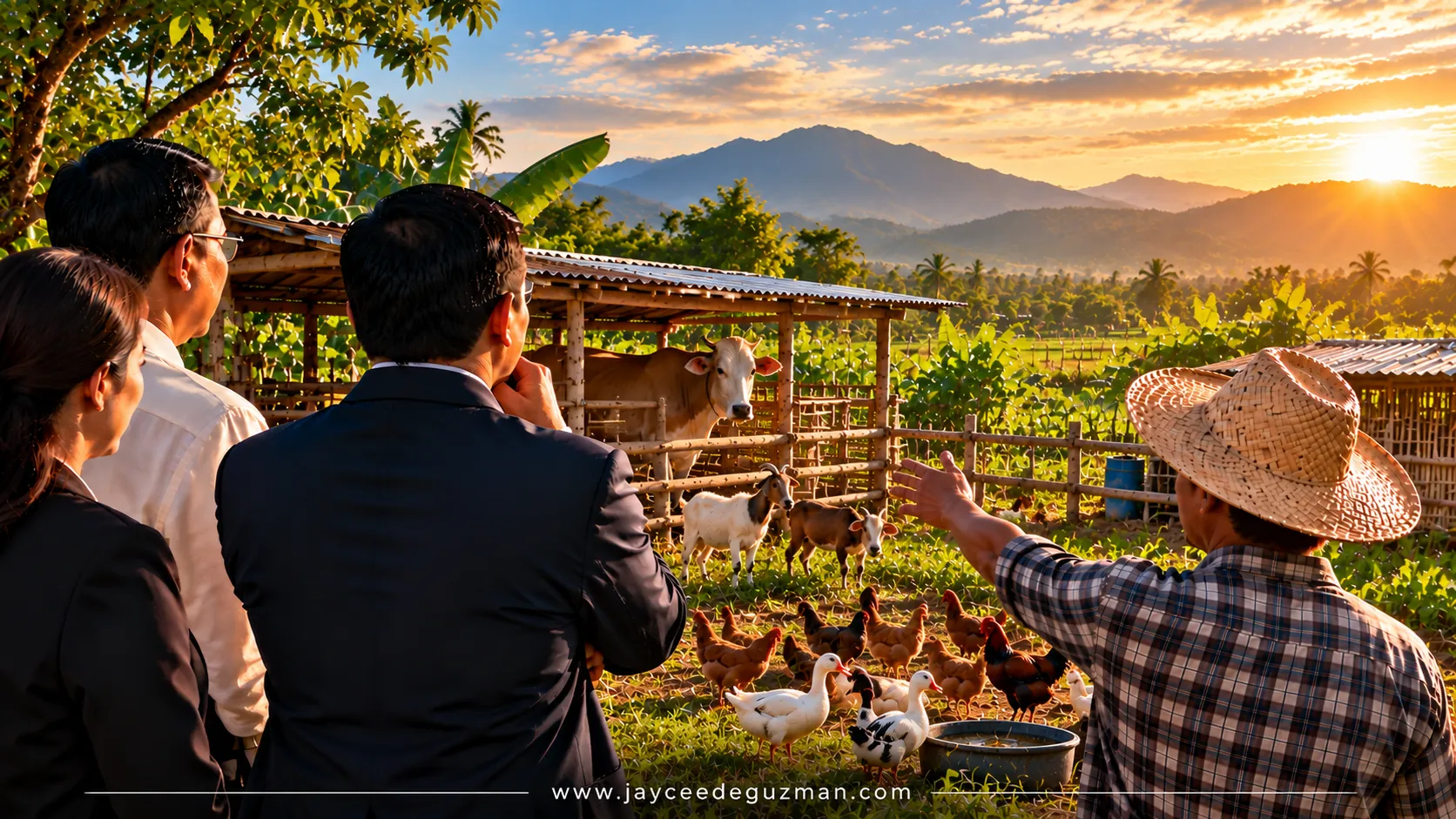
My experience as a livestock farmer has made me recognize that raising animals is only one part of sustaining an agricultural livelihood.
In many municipal and city livestock distribution programs, local veterinary offices conduct seminars on proper animal care before distributing livestock. However, knowing how to raise animals does not automatically mean knowing how to turn production into a sustainable livelihood. Farmers also need the commercial and financial knowledge to manage what happens after production.
1. The lack of proper marketing knowledge
Many small-scale farmers still rely heavily on traditional ways of selling their products. It is not unusual for them to go from one household to another, offering their produce to whoever might be interested. While nothing is inherently wrong with this approach, it limits their ability to reach wider and more suitable markets.
What concerns me more is the limited understanding of how modern marketing actually works. Having a Facebook account, publishing posts, or creating a website does not automatically make someone knowledgeable about marketing. There is a considerable difference between knowing how to use these platforms and using them properly for business.
Effective marketing begins with identifying the right audience. A farmer selling table eggs, for example, should understand who is most likely to buy regularly. Potential customers include households, restaurants, bakeries, grocery stores, and institutional buyers. Each market has different purchasing requirements, preferences, and buying behavior.
Marketing to everyone without identifying likely customers is not necessarily an efficient way to sell. There is also a difference between constantly looking for customers and building a system that allows customers to find sellers. Properly utilized websites, social media platforms, and digital marketing strategies can help farmers establish an online presence. These tools can communicate product offerings, reach specific audiences, and generate inquiries from interested buyers.
The generational gap makes this challenge more complicated. Many older farmers are unfamiliar with digital marketing, while their children may understand technology without knowing how to market agricultural products. Others have little interest in continuing their parents’ livelihoods, particularly when farming has been presented as something they should leave behind for a better life. This leaves many farming families without a clear path for transferring both agricultural knowledge and the business skills needed to sustain their operations.
I believe there is value in hearing from people who have ventured into livestock farming or agriculture, started with limited capital, and eventually built profitable operations. Sharing their experiences could offer practical lessons to aspiring farmers and help younger generations see agriculture as a viable livelihood.
Beyond celebrating their success, I hope more of these stories will also share the decisions, management practices, challenges, and financial considerations behind it. These practical insights could help others understand what entering agriculture actually entails. Inspiration has its place, but the opportunity to learn from someone else’s experience can be just as valuable.
2. The lack of financial literacy among small-scale farmers
Another concern I have observed is the limited understanding of financial literacy among small-scale farmers. Knowing how to earn money from farming is not the same as knowing how to manage it. A farmer may generate revenue from selling livestock, eggs, or agricultural produce. However, determining actual earnings requires accounting for feed, labor, medicines, transportation, utilities, and other operating expenses.
There is a tendency to treat money received from sales as income available for spending. This overlooks the distinction between gross sales and net profit. Without proper records, farmers may struggle to determine whether their operations are profitable. They may also overlook their largest expenses or miscalculate the capital needed for subsequent production cycles.
Some might argue that financial literacy is unnecessary for people with very little money to manage. I disagree. The best time to learn financial management is before acquiring substantial resources. Financial literacy is not exclusively for people who already possess wealth. It helps individuals make better decisions with whatever resources they currently have.
Financial literacy also goes beyond budgeting, savings, and accounting. Financial discipline also requires distinguishing necessary household expenses, productive investments, savings, and discretionary spending. Farmers must understand how their spending decisions affect both household finances and the continuity of their agricultural operations.
3. The absence of a dependable market for agricultural produce
The third concern is the lack of accessible and dependable institutional purchasing arrangements for many small-scale farmers. Producing agricultural goods is only one part of running a successful farming operation. Farmers must also know where, when, and to whom they can sell. Without predictable markets, production becomes a financial gamble.
Farmers may spend money raising animals or cultivating crops without finding suitable buyers. Even when buyers exist, their offered prices might not make production economically worthwhile. This uncertainty makes it difficult to sustain agricultural operations.
I believe government-backed buy-back arrangements deserve serious consideration, particularly for small-scale livestock raisers. This does not require a nationwide program covering every agricultural commodity. Participating local government units could initially implement such arrangements in selected sectors. Implementation would depend on their capacity, available budgets, and actual market demand.
Consider a municipal livestock distribution program involving chickens or ducks. Distributing animals provides beneficiaries with an opportunity to engage in livestock production. However, what happens after those animals begin producing eggs? Without established buyers, beneficiaries must independently find markets for their produce.
Some may eventually sell the animals themselves or use them for household consumption. This could defeat the intended purpose of establishing a continuing source of livelihood.
A different arrangement could provide participating beneficiaries with defined purchasing agreements. Under these agreements, the LGU commits to buying their eggs. Purchases would follow agreed quantities, quality standards, pricing, and delivery schedules. Beneficiaries would therefore have an identified buyer rather than relying entirely on their individual marketing capabilities.
The purchased eggs could also support public nutrition programs, particularly school feeding initiatives. Manila’s YORMILK program, introduced under Mayor Isko Moreno Domagoso, illustrates how local governments can connect feeding initiatives with public welfare.
Locally produced eggs could provide another nutritional option for schoolchildren. Eggs contain all nine essential amino acids and provide highly digestible, bioavailable protein. The Food and Agriculture Organization (FAO) discusses the nutritional value of animal-source foods. Any egg-based initiative would require appropriate nutritional planning, food safety measures, storage, and preparation. It should complement, rather than displace, existing milk programs.
Government-purchased eggs could also support qualified orphanages, nonprofit organizations, charitable institutions, and other groups serving vulnerable communities. These may include Caritas Tarlac, the social action arm of the Diocese of Tarlac, where I serve as a volunteer. Eligible non-regular government employees could also be considered, subject to established assistance criteria. Distribution should follow fair eligibility standards and must not favor any particular institution or group.
Such an arrangement would require careful implementation. The LGU must consider its procurement authority, budget, storage capacity, distribution requirements, and actual demand. Purchasing commitments must be financially sustainable and supported by workable agreements. A buy-back program cannot promise unlimited purchases without considering these operational realities.
Nevertheless, the underlying principle deserves consideration. Livestock distribution should not end with transferring animals to beneficiaries. There must also be consideration of how beneficiaries can turn production into continuing income. Access to productive assets becomes more meaningful when accompanied by a viable path to market.
Measuring the actual results of agricultural interventions
Identifying these concerns does not require groundbreaking discoveries. They are practical problems that deserve serious attention from institutions designing and implementing agricultural interventions. The more important question is whether these initiatives can demonstrate consistently visible and verifiable results.
It is one thing for agencies to report conducting livelihood seminars and providing financial education. It is another to demonstrate whether these initiatives actually benefit their intended recipients. Effectiveness should not depend solely on reports, presentations, or institutional claims. It should also be evident through observable improvements, measurable results, and independent assessments.
A government initiative should not be declared successful by presenting one beneficiary as proof of its effectiveness. A carefully prepared success story does not establish whether the program works for the wider beneficiary population. Livelihood programs must be evaluated through measurable outcomes experienced by their intended recipients.
For instance, I would propose that at least 75% of beneficiaries meet a clearly defined success matrix. This should be the minimum benchmark before considering the initiative successful. For livestock distribution, the assessment should include measurable income generated from distributed animals. Calculations must account for production expenses and actual net earnings, not merely gross sales.
The assessment should cover the entire beneficiary population and follow a defined evaluation period. Supporting records must also be independently verifiable. The 75% threshold is my proposed performance benchmark, not a universally prescribed standard.
More importantly, the results should be publicly accessible. This is consistent with Article II, Section 28 of the 1987 Constitution. The provision adopts a policy of full public disclosure of government transactions involving public interest. Program expenditures, beneficiary coverage, success rates, and consolidated income results should be available for public scrutiny. This remains subject to applicable privacy and confidentiality requirements.
I am not suggesting that nothing has been done. Rather, I believe agricultural interventions should be assessed through the results experienced by their intended beneficiaries, not merely through implementation reports or isolated success stories.
A piecemeal solution cannot make agriculture a career of choice again. All stakeholders must make conscious and conscientious efforts now. Otherwise, we risk breeding a new generation of Jose Rizals, Andres Bonifacios, and Apolinario Mabinís instead of a new generation of Filipino farmers.
From Advocacy to Action: What Can I Contribute?
As a Technical Consultant for the Office of the Secretary of the Department of Agrarian Reform (DAR), I recognize that raising agricultural concerns also invites a reasonable question: What can I contribute toward addressing them?
I do not claim that my position gives me the authority to resolve every agricultural concern. Nor do I consider every problem affecting farmers to fall within DAR’s mandate. My consultancy has defined responsibilities, and I must work within the scope of my assignment and the Department’s institutional authority.
My experience in livestock farming gives me a practical perspective that I can bring to relevant discussions. Where appropriate and within my assignment, I can share observations, provide input, and raise considerations that may help inform decisions affecting agrarian reform beneficiaries. I can also recognize concerns that require coordination with other offices or institutions beyond my authority.
I recognize that my contribution has limits. I cannot promise that every concern raised will lead to government action, nor can I claim credit for decisions or outcomes beyond my involvement. What I can do is fulfill my professional responsibilities and contribute the practical perspective I have gained from firsthand farming experience.
I raised these concerns because I believe they deserve more than acknowledgment. They deserve consideration, constructive proposals, and responsible action from those in positions to contribute. I may not have the authority to address every problem, but I have a responsibility to make meaningful use of the opportunities and responsibilities entrusted to me.